2020 has definitely seen its share of major issues. From a global pandemic, hightened racial tensions, more killings of blacks at the hands of police, the 2020 presidential election, and for Louisiana an unprecedented rash of hurricanes and tropical storms.
NFAC’s founder and leader, Grandmaster Jay, said he then made a decision to visit Lafayette because “we have a problem.”
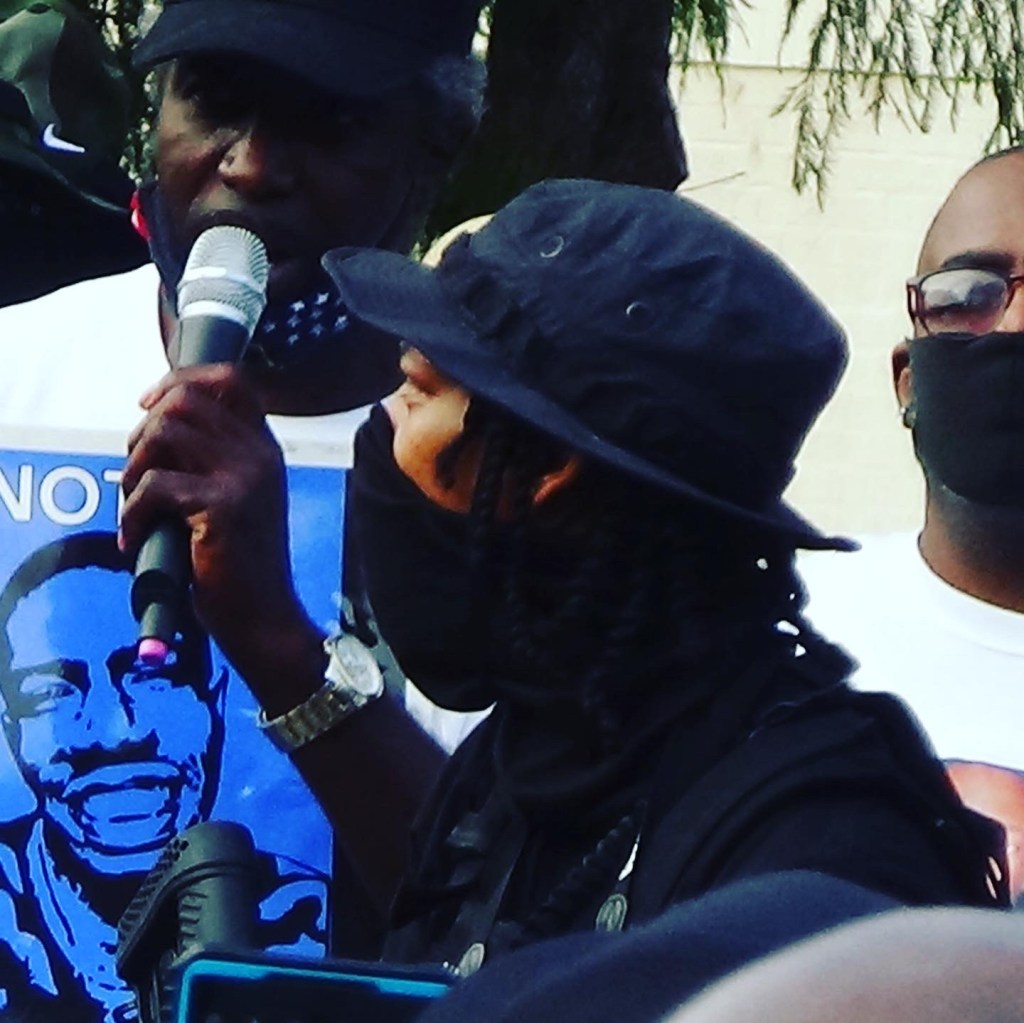
Photo Credits: Tracy E. Antoine Father of slain Victor White holds his son’s picture.
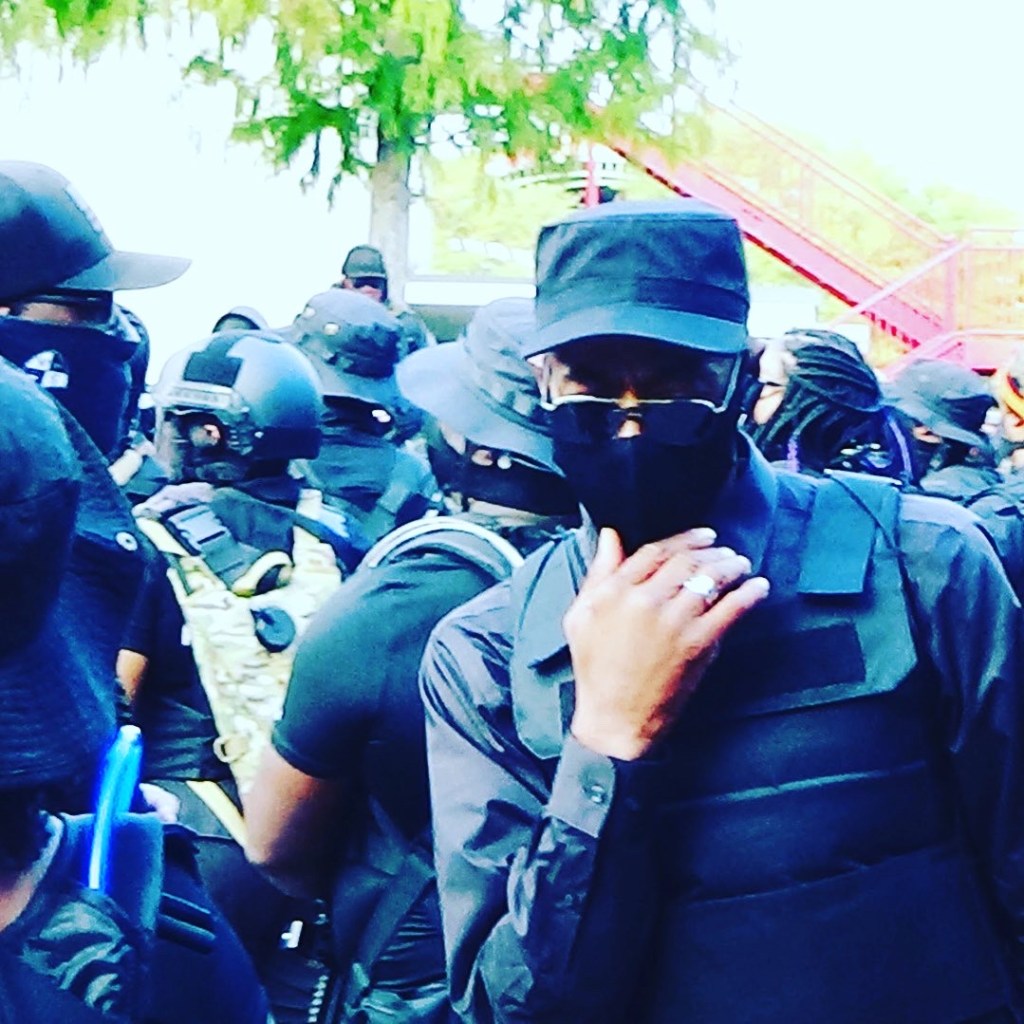
Not only did Grandmaster Jay address Congressman Higgins, outrageous remarks but he was accompanied by hundreds of members of the NFAC to “stand in solidarity with the sisters and brothers of Lafayette.”
Verone Thomas, a Louisiana activist also attended the march and spoke to the crowd about exercising their right to vote as well as educating themselves, so that they can work to get more African Americans on the ballot. I caught up with Mr. Thomas via phone and he had this to say,
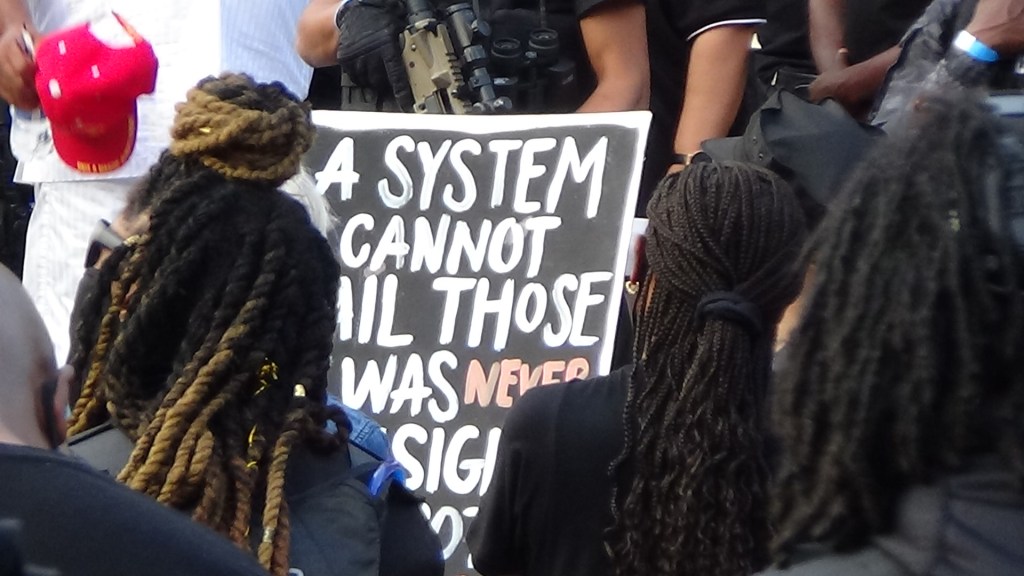
Photo Credit: Tracy E. Antoine Crowd at march holding signs.
A life long resident of the area, Cassandra Demouchet, along with her fiancé and their ten kids, ranging from age 15 years old to their one-year-old, said, “I am mesmerized by the amount of structure, discipline, and restraint the NFAC display. Im excited that my kids could see something like this, besides just in the movies.”
Horace Cheffin, who also attended the march said, “I have never been to a protest, so my friend asked me if I wanted to go, and we took that 3 hour drive. I wanted to see first hand how things really go down and how the media tries to make it into something else.” Cheffin goes on to say, “The overall protest was needed because it’s time to take a stand against injustice.”
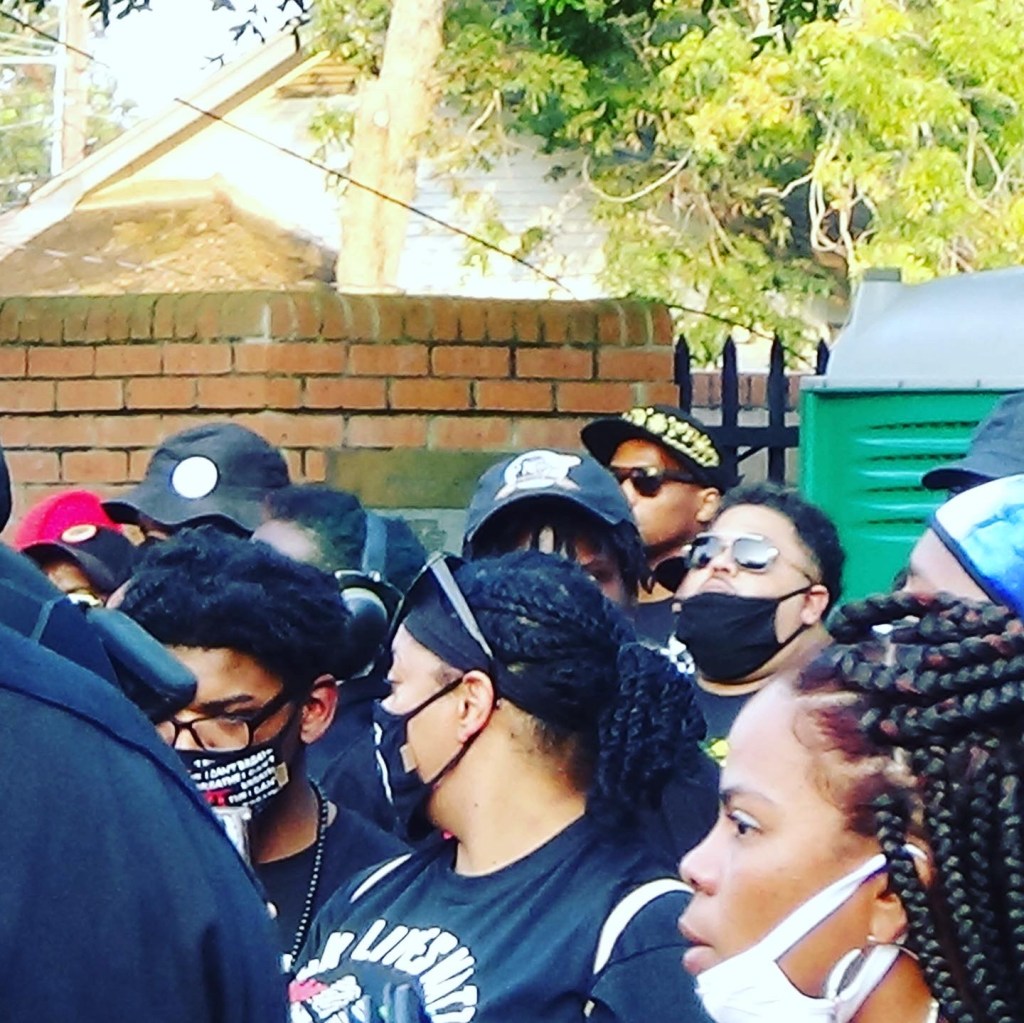
Photo Credits: Tracy E. Antoine Crowd of peaceful protesters.
Although, some white citizens also felt the need to attend the march, armed, the protest remained peaceful.
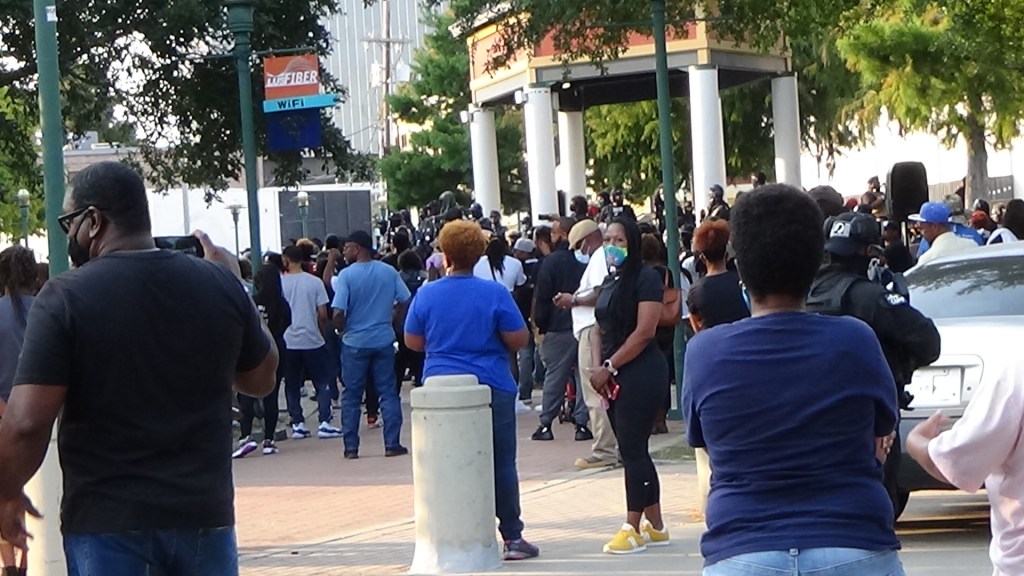
Photo Credits: Tracy E. Antoine Crowd at Parc Sans Souci in Lafayette, LA
Verone Thomas and Grandmaster Jay (John Jay Fitzgerald Johnson) ran together on the presidential ballot in 2016 and have begun preparations to run again during the 2024 presidential election.
Photo Credits: Tracy E. Antoine Grandmaster Jay – NFAC
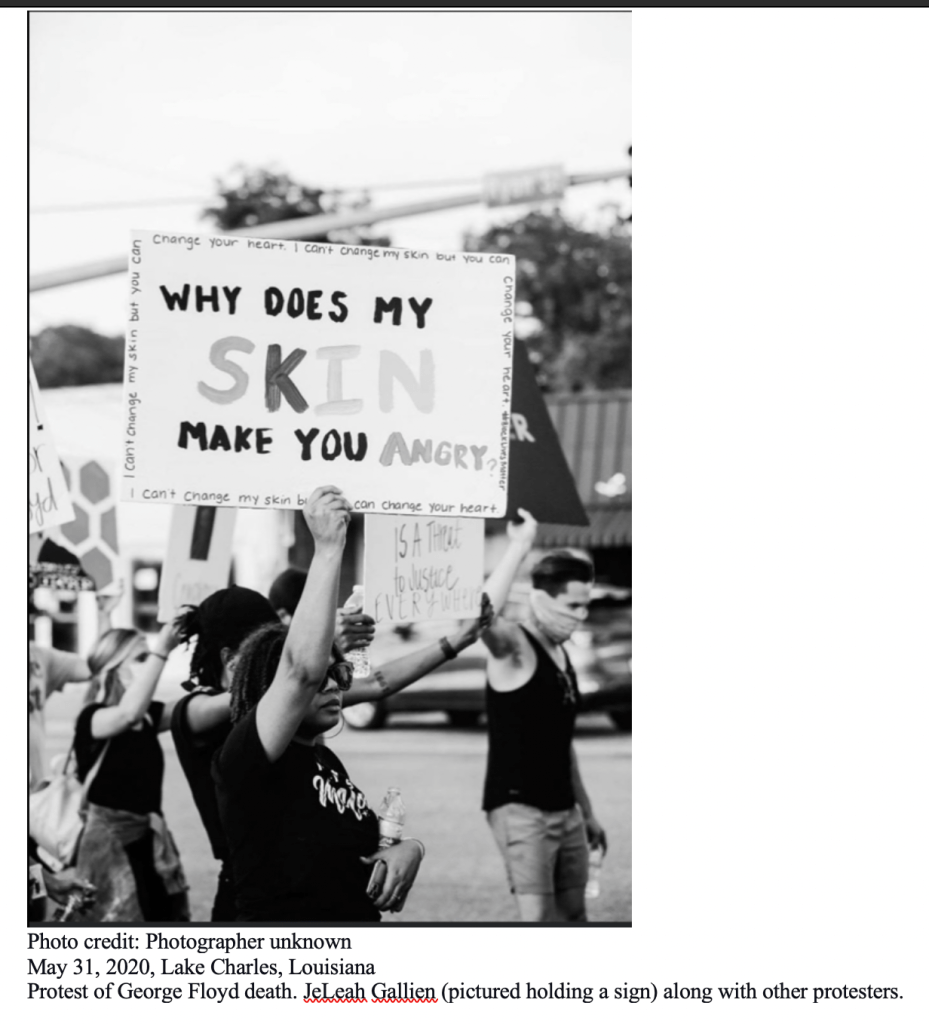
On May 31, 2020, amid the COVID-19 and social distancing, the Lake Charles’ Black Heritage Festival, several community activists, and citizens of all races, from Lake Charles, Louisiana, gathered together, signs in hands, masks on faces: to peacefully protest, yet another black man slain by police, in, what seems to be, the never-ending social injustice for people of color. Will we see equality, ever?
On May 25, 2020, George Floyd was detained by Derek Chauvin and two other Minneapolis police officers. Video quickly emerged, showing Floyd lying on his stomach with his arms cuffed behind his back. The video also shows Chauvin kneeling on the back of George’s neck for nearly nine minutes. During that time, Floyd stated that he could not breathe, but his plea fell on deaf ears.
Donald Thomas, a local business owner and community activist, who rallied along with the Lake Charles Black Heritage Festival, to organize the protest, spoke to KPLC News, the local news station, the day of the protest.
“Everyone is entitled to an equal, fair, and abundant life. If you’re taking that from someone, whether you’re taking their life, alienating their rights, making disadvantage, being prejudice, being racist, you’re wrong,” Thomas said.
Four weeks later, a more in-depth conversation with Thomas revealed who he is and why he felt “compelled” to organize the George Floyd protest.
“I run a marketing and promotions company, but as a way to give back to my community, I organize empowerment and motivational events for kids and economically challenged areas of our city. I organized the protest as an outlet for all the negativity that we’ve been seen on tv and all the challenges that 2020 has brought so far. I expressed to my fiancé how angry, depressed, and afraid I had been with everything, and she encouraged me to do something, so I did. Floyd explains. Where I grew up, there weren’t many things that other neighborhoods have access to. In the city where I live, certain groups are overlooked. It’s always been in my heart to make a difference and with God’s help and guidance, I’ve been able to. Whether it’s buying school clothes and supplies for kids or assisting people in opening businesses, or speaking on empowerment to encourage people, I feel it’s an honor and a responsibility.”
When asked, what advice (if any) does Thomas give to people of color, especially black males, about how to deal with the police, racial discrimination/racial profiling, and changing the narrative of how people of color are viewed?
“It’s hard to say because sometimes even when you comply you still die or get set up. I think initially you try to live to fight another day. I pray God protects us all, and I’m optimistic that change is on the way,” Thomas replied.
On June 6,I spoke to JeLeah Gallien, a 27-year-old black female, who attended the local protests, in Lake Charles and Lafayette on May 31, 2020. She was so passionate when I initially spoke to here at the Lake Charles protest, that there was a need to speak to her again about the second protest, she attended the same day. This conversation was to get a sense of how these protests affected JeLeah and the people of her generation.
“It was life-changing not only to see the cities unite for the global injustices and police brutality but also to see every race of people come together to fight against racism, she said. It was powerful. We chanted ‘Black Lives Matter. No justice, no peace!'”
JeLeah went on to recount the emotional, atmospheric climate.
“You could feel the pain and the hope for change, JeLeah stated. Lafayette and Lake Charles have had very great marches, that were peaceful yet, we still, in hopes, got our message across. In Lafayette, we walked a mile to the police and surrounded the station and demanded that our lives matter and that we want justice, she explained. It was a moment I’ll never forget.”
According to an interview with Lake Charles residents, Christopher and Candace Rideau, who were close friends of Floyd and spoke of the man they knew as a good man, father, and friend, in an interview with KPLC News. Candace recalls the day that George informed her and her husband, Chris, about the birth of Floyd’s daughter.
“He had the biggest smile on his face, um when he told us that JJ was born, which is his baby girl,” she said.
Chris goes on to say that “to make and understand, why and what we’ve been through when you know how to react. Putting your foot in someone else’s shoes really, will kind of help of where you come from.”
The Rideau’s told KPLC News that there was a quote Floyd always said, “I will touch the world.”
George Floyd’s death has done just that, as political officials and even celebrities have spoken out against the untimely death of George Floyd.
On the heels of the brutal death of Ahmad Arbery, on February 23, 2020, the senseless death of Floyd perpetuates the systematic racism and social injustices of black people in America. Not, to mention in the days following Floyd’s death, on June 12, 2020, yet another man, Rayshard Brooks, was unjustly killed in the parking lot of an Atlanta restaurant, by those who are sworn to protect and serve.
There have been many protests in the weeks following George Floyd’s tragic and senseless death. The world needs to acknowledge what is going on and continue to fight injustice. It is time to have the hard conversations about Structural Racism. Tricia Rose, an American sociologist, and author who pioneered scholarship on hip hop and the professor of Africana Studies at Brown University, is the director of the Center for Study of Race and Ethnicity in America. For the last few decades, Tricia Rose has conducted studies on structural and systematic racism in the U.S.
During an interview with BBC News Segment, Tricia says, “People need to understand, when they talk about systemic racism, that its broader than the police, in and of itself. Right. It is really about connecting the police to the criminal justice system as a whole, to deep levels of wealth and equality, educational – profound educational inequities, housing discrimination and my own research in these areas, show that it’s an interlocking web that deeply crushes people, and the police are really one tipping point in relation to that broader system.”
*This website is not to focus on racism but on everyone being able to live the best possible life. That change will only come by the reconstruction of our thinking and accept that we are all interconnected. Before our physical world heals, the inhabitants must make this change. It is time to heal the nation. The hundreds of years of racism, social injustice, and murder by the people we look to protect us, is time to come to an end.
 TEA Firm